

Benefits of Automatic Pet Feeders Explained
Over 60 percent of pet owners worry about missed meal times when work or travel gets in the way. Consistency matters for pet health, so even a single skipped feeding can create stress for both you and your animal. Automatic pet feeders promise an answer to these challenges by delivering portioned meals right on schedule. This guide clears up common myths, explains the types of feeders, and helps you decide how smart technology can best support your pet’s daily routine.
Table of Contents
- Automatic Pet Feeders: Core Concept And Myths
- Types Of Automatic Pet Feeders Compared
- How Automatic Pet Feeders Operate
- Key Features And Smart Technology Integration
- Safety, Reliability, And Potential Drawbacks
- Comparing Automatic Feeders To Traditional Bowls
Key Takeaways
| Point | Details |
|---|---|
| Automatic pet feeders enhance convenience | They provide precise meal timing and portion control, catering to pet owners with unpredictable schedules. |
| Myths about automatic feeders | These devices should complement, not replace, human interaction and veterinary care; misconceptions can lead to unrealistic expectations. |
| Types of automatic feeders | Pet owners should consider different models—gravity, electronic, and smart feeders—each with unique features to suit their needs. |
| Potential challenges exist | While beneficial, pitfalls like technical glitches and power dependency necessitate regular maintenance and monitoring. |
Automatic Pet Feeders: Core Concept and Myths
Automatic pet feeders are sophisticated devices designed to simplify pet nutrition management by dispensing precise food portions at predetermined times. According to research from ijraset, these systems range from basic gravity-fed dispensers to advanced programmable devices with intricate scheduling capabilities.
At their core, automatic pet feeders solve several critical challenges for pet owners. They provide consistent meal timing, control portion sizes, and offer flexibility for those with unpredictable work schedules or travel commitments. Unlike traditional feeding methods, these smart devices ensure your pet receives meals exactly when needed, reducing anxiety about missed feeding times.
However, pet owners must understand important myths surrounding these devices. Scratchandpatch emphasizes that automatic feeders are assistance tools, not complete replacements for human interaction. Key misconceptions include:
- Automatic feeders can fully substitute human care
- These devices eliminate the need for veterinary monitoring
- All automatic feeders provide identical functionality
Realistic expectations are crucial. While these devices offer tremendous convenience, they complement rather than replace attentive pet parenting. Regular health checks, emotional engagement, and understanding your pet’s unique nutritional needs remain paramount. Smart pet owners view automatic feeders as technological aids that enhance, not supersede, their fundamental caregiving responsibilities.
Types of Automatic Pet Feeders Compared
Automatic pet feeders come in diverse configurations designed to meet varying pet owner needs. According to research from ijraset, these systems range from basic gravity-fed models to sophisticated programmable devices with advanced technological capabilities.
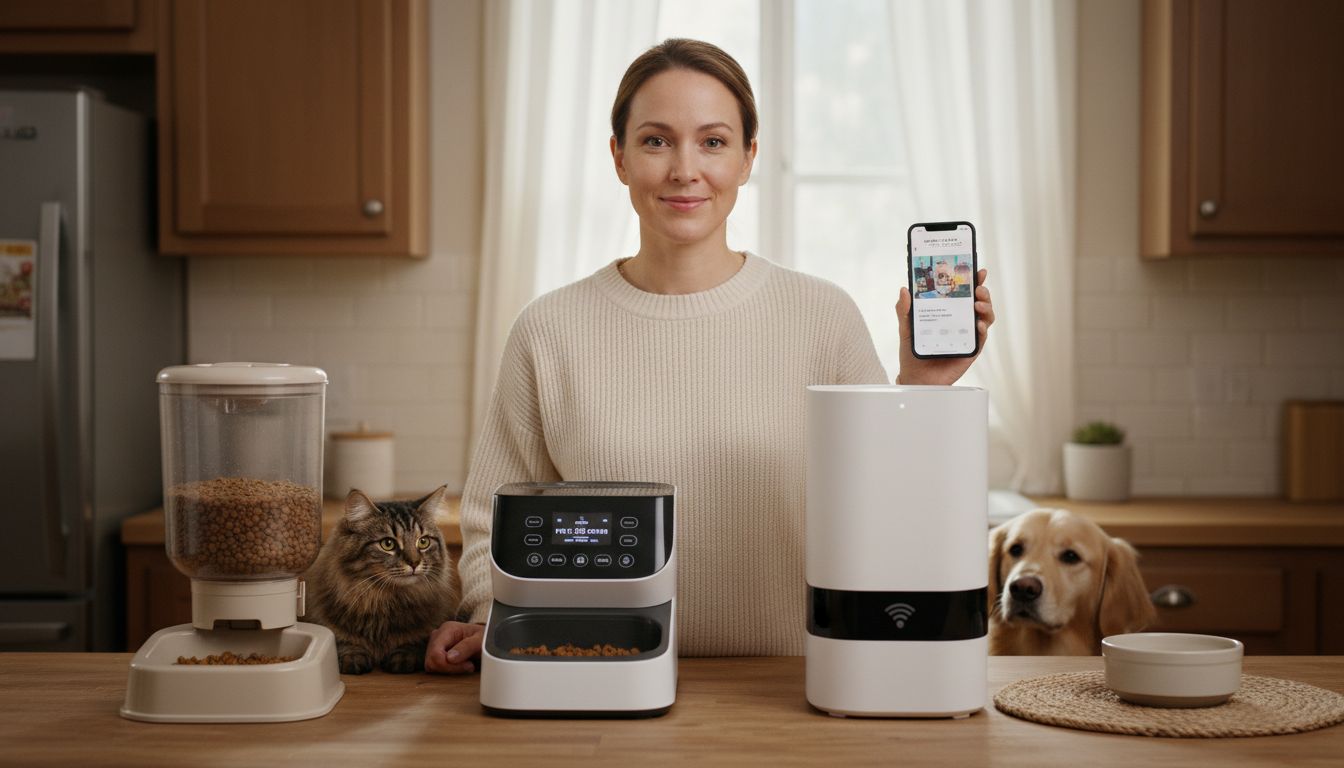
Three primary types of automatic pet feeders dominate the market:
- Gravity-Based Feeders
- Simple mechanical design
- Food flows down as pets eat
- No electronic components
- Most affordable option
- Best for single-pet households
- Electronic Programmable Feeders
- Digital scheduling capabilities
- Precise portion control
- Multiple meal programming
- Battery or electrical power
- Ideal for pets with strict dietary requirements
- Smart WiFi-Connected Feeders
- Mobile app integration
- Remote feeding control
- Real-time monitoring
- Portion tracking
- Advanced features like camera monitoring
When selecting an automatic pet feeder, pet owners should consider factors like pet size, dietary needs, technological comfort, and budget. Each type offers unique advantages, but the goal remains consistent: providing reliable, consistent nutrition for your furry companion.
 Learn more about smart pet feeder options to make an informed decision that best suits your pet’s specific requirements.
How Automatic Pet Feeders Operate
Automatic pet feeders leverage sophisticated technological mechanisms to ensure precise and reliable pet feeding. According to research from ijraset, these devices incorporate advanced sensors and timing systems to manage food distribution with remarkable accuracy.
The core operational components of these devices typically include:
- Dispensing Mechanism: A motorized system that precisely controls food portion release
- Scheduling System: Digital timer enabling multiple feeding programs
- Portion Control: Calibrated measurements ensuring consistent food quantities
- Power Management: Options for battery or electrical power sources
Drawing insights from ejournal, the technical design often integrates key components like DC motors, load cells for weight measurement, and real-time clock modules. These elements work in synchronization to create a reliable feeding experience.
For instance, a load cell can precisely measure food quantities, while the real-time clock ensures feeding occurs at predetermined times.
Modern automatic pet feeders have evolved beyond simple timing mechanisms. They now incorporate smart technologies like mobile app connectivity, allowing pet owners to monitor and control feeding remotely. Check out our smart automatic pet feeder to experience how technology can transform pet care, providing convenience and peace of mind for pet owners worldwide.
Key Features and Smart Technology Integration
Smart pet feeders have revolutionized pet care through advanced technological innovations. According to research from arxiv, modern devices now integrate sophisticated monitoring capabilities that go far beyond simple food dispensing, including AI-enabled tracking and comprehensive health assessment technologies.
Key smart technology features include:
- Remote Monitoring: Real-time video surveillance of pets
- AI-Powered Insights: Behavioral pattern recognition
- Health Tracking: Nutrition and activity level monitoring
- Customizable Scheduling: Precise feeding time programming
- Mobile App Integration: Complete remote control functionality
As highlighted by Wired, contemporary smart pet feeders now offer remarkable capabilities such as HD cameras with night vision, two-way audio communication, and multi-hopper food dispensing systems. These technologies transform automatic feeding from a simple mechanical process into an intelligent pet care solution that provides unprecedented insights and control.
The integration of smart technologies means pet owners can now monitor their pet’s nutrition, health, and behavior with unprecedented precision. Learn more about smart pet feeding technologies to understand how these innovative devices are reshaping pet care in the digital age.
Safety, Reliability, and Potential Drawbacks
While automatic pet feeders offer remarkable convenience, they are not without potential challenges. According to research from scratchandpatch, these devices are tools to assist pet owners, not complete replacements for direct care and attentive monitoring.
Key potential drawbacks and safety considerations include:
- Technical Glitches: Potential software or hardware malfunctions
- Power Dependency: Risk of interruption during battery or electrical failures
- Mechanical Limitations: Potential jamming or dispensing inconsistencies
- Network Connectivity: Reliability issues with WiFi-dependent models
- Calibration Challenges: Potential inaccuracies in portion control
Research from ijraset emphasizes the critical need for regular maintenance and monitoring. Reliability hinges on consistent care, periodic system checks, and understanding the device’s specific operational requirements. Pet owners must view these technologies as sophisticated tools that complement, not replace, their fundamental caregiving responsibilities.
To mitigate potential risks, consider implementing backup feeding strategies and maintaining manual feeding capabilities. Learn more about choosing reliable smart pet feeders to ensure your pet’s nutritional needs are consistently and safely met.
Comparing Automatic Feeders to Traditional Bowls
Traditional pet feeding methods have long been the standard, but automatic pet feeders are rapidly transforming how we approach animal nutrition. According to research from ijraset, these innovative devices offer significant advantages over conventional feeding approaches, particularly in portion control and scheduling precision.
Key differences between automatic feeders and traditional bowls include:
- Portion Control: Precise measurements vs. manual guesswork
- Feeding Consistency: Scheduled, timed meals vs. irregular feeding patterns
- Hygiene Management: Automated cleaning and dispensing vs. static food bowls
- Monitoring Capabilities: Digital tracking vs. manual observation
- Flexibility: Remote management vs. on-site feeding requirements
Traditional bowls typically rely entirely on human intervention, creating potential challenges like overfeeding, inconsistent meal times, and limited nutritional tracking. Automatic feeders address these limitations by providing structured, controlled feeding experiences that can be customized to individual pet needs.
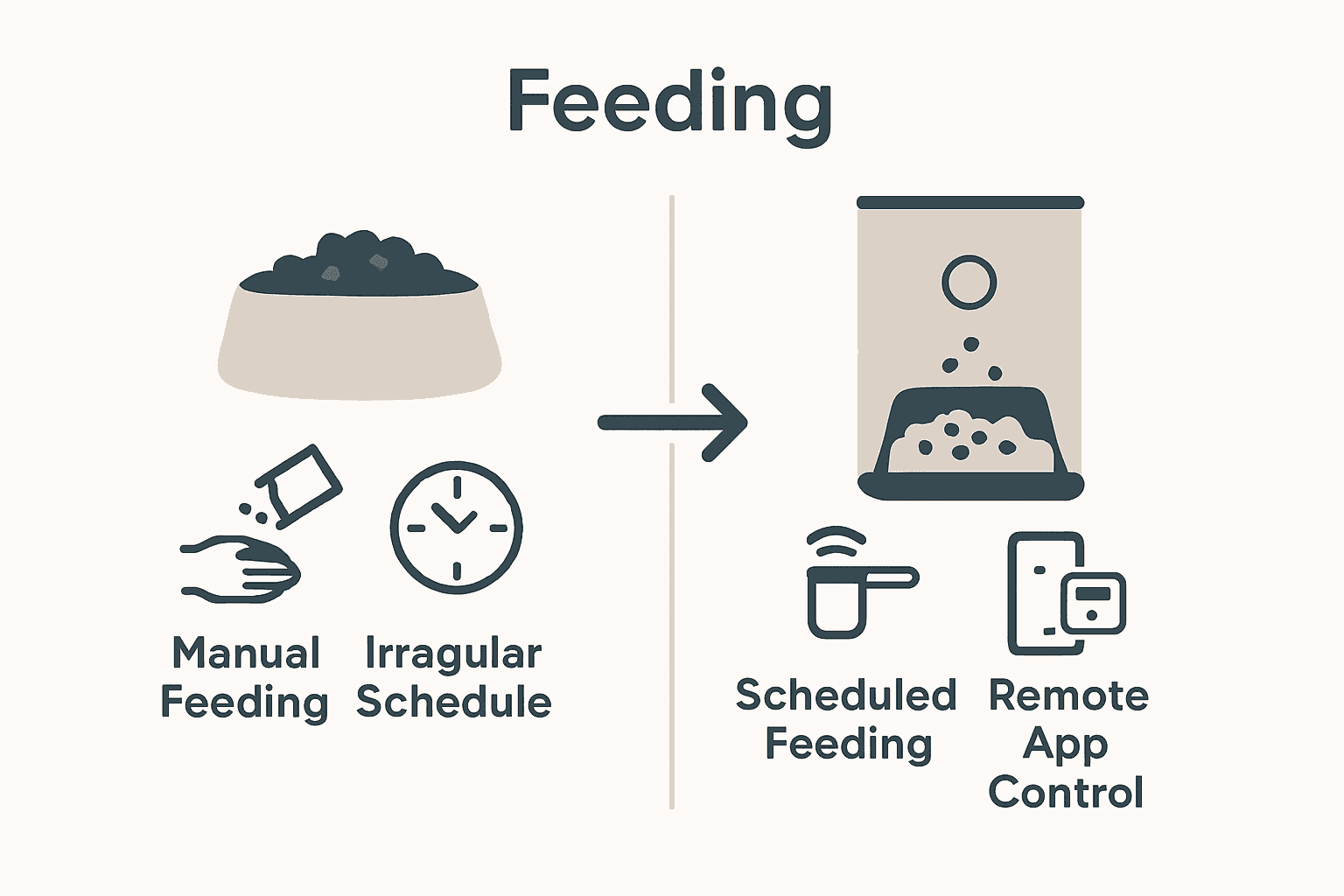 These devices represent a technological leap forward, transforming pet nutrition from a manual task to a precise, data-driven process.
Learn more about advanced pet feeding technologies to understand how modern feeding solutions can enhance your pet’s dietary management and overall well-being.
Discover How Automatic Pet Feeders Can Transform Your Pet’s Daily Routine
Managing your pet’s nutrition with precision and consistency can be a real struggle when balancing a busy lifestyle or coping with unpredictable schedules. This article highlights how automatic pet feeders provide a solution that ensures your furry friend receives timely and accurate meals, eliminating worries about missed feeding times or overfeeding. With key benefits like controlled portion sizes and smart scheduling, these devices offer peace of mind and healthier habits for pets.
Ready to bring this convenience and care into your home? Explore our wide selection of Automatic Pet Feeders | Paw Heroes Shop designed to fit any pet’s needs and lifestyle.
Take control of your pet’s feeding with advanced technology today. Visit Paw Heroes Shop to find smart, reliable feeding solutions. For a complete approach to pet wellness, also check out our Smart Pet Water Fountains | Paw Heroes Shop and keep your pet hydrated alongside a balanced diet. Don’t wait to give your pet the care they deserve with innovations made just for them.
Frequently Asked Questions
What are the main benefits of using automatic pet feeders?
Automatic pet feeders offer consistent meal timing, precise portion control, and flexibility for pet owners with busy schedules. They help ensure your pet receives the right amount of food at the right time, reducing anxiety about missed feedings.
How do automatic pet feeders work?
Automatic pet feeders operate using a dispensing mechanism controlled by a scheduling system. They can be gravity-based or electronic, with features like portion control and battery or electrical power options to distribute food at set times.
Are there different types of automatic pet feeders?
Yes, there are three primary types of automatic pet feeders: gravity-based feeders, electronic programmable feeders, and smart WiFi-connected feeders. Each type offers distinct features and functionalities to meet varying pet owner needs.
Can automatic pet feeders replace human interaction with pets?
No, automatic pet feeders are designed to assist with feeding, not to replace human interaction. Regular monitoring and emotional engagement with pets are crucial for their overall well-being, alongside using these technological aids.