

Retractable Leashes Explained: Complete Pet Owner Guide
More than 40 percent of dog owners have considered switching to retractable leashes, searching for the best way to balance freedom with control during daily walks. With so many leash options out there, knowing which type fits your needs can save frustration and help keep both you and your dog safe. Whether you want to encourage healthy exercise or just give your pup space to explore, understanding retractable leashes opens the door to more enjoyable walks together.
Table of Contents
- What Are Retractable Leashes Used For?
- Main Types Of Retractable Leashes
- Key Features And How They Operate
- Safety, Risks, And Usage Guidelines
- When To Choose Standard Or Retractable Leashes
Key Takeaways
| Point | Details |
|---|---|
| Purpose of Retractable Leashes | Retractable leashes provide dogs with extended mobility while maintaining control for the owner, suitable for well-trained dogs. |
| Types of Retractable Leashes | There are two main types: cord leashes, which are lightweight but prone to tangling, and tape leashes, which offer durability and better visibility. |
| Safety Considerations | Owners must be aware of safety risks such as entanglement and loss of control, ensuring their dogs are well-trained for safe use. |
| Choosing the Right Leash | Selection depends on the dog’s behavior and environment; standard leashes are better for urban settings, while retractable leashes are ideal for open spaces with minimal hazards. |
What Are Retractable Leashes Used For?
Retractable leashes are innovative walking tools designed to provide dogs with extended mobility and exploration opportunities during walks. According to the AKC, these leashes are specifically engineered to give dogs more freedom by allowing them to roam and investigate their surroundings while remaining connected to their handler.
The primary purpose of a retractable leash is to balance control and freedom for both pet and owner. Dogs typically receive 10 to 25 feet of flexible movement, which enables them to:
- Explore wider areas during walks
- Sniff and investigate interesting scents
- Move at their own comfortable pace
- Enjoy more physical activity and mental stimulation
However, the MSPCA cautions that while retractable leashes offer expanded mobility, they also come with potential safety risks. Pet owners must understand that these tools require careful handling and consistent training to ensure both the dog’s safety and the handler’s control.
Ideal scenarios for retractable leashes include open, controlled environments like spacious parks, quiet suburban streets, and designated walking areas where potential hazards are minimal. They work best with well-trained dogs who respond reliably to vocal commands and have a solid understanding of walking etiquette. For most pet owners, retractable leashes represent a flexible alternative to traditional fixed-length leashes, offering a dynamic walking experience that can be both enjoyable and practical when used responsibly.
Main Types Of Retractable Leashes
According to the AKC, retractable leashes primarily come in two fundamental types: cord leashes and tape leashes. Each type offers distinct characteristics that cater to different dog walking preferences and safety requirements.
Cord Leashes are characterized by their thin, rope-like design. These leashes typically:
- Are lightweight and compact
- Tend to be less expensive
- Can be more prone to tangling
- Might pose a higher risk of rope burns
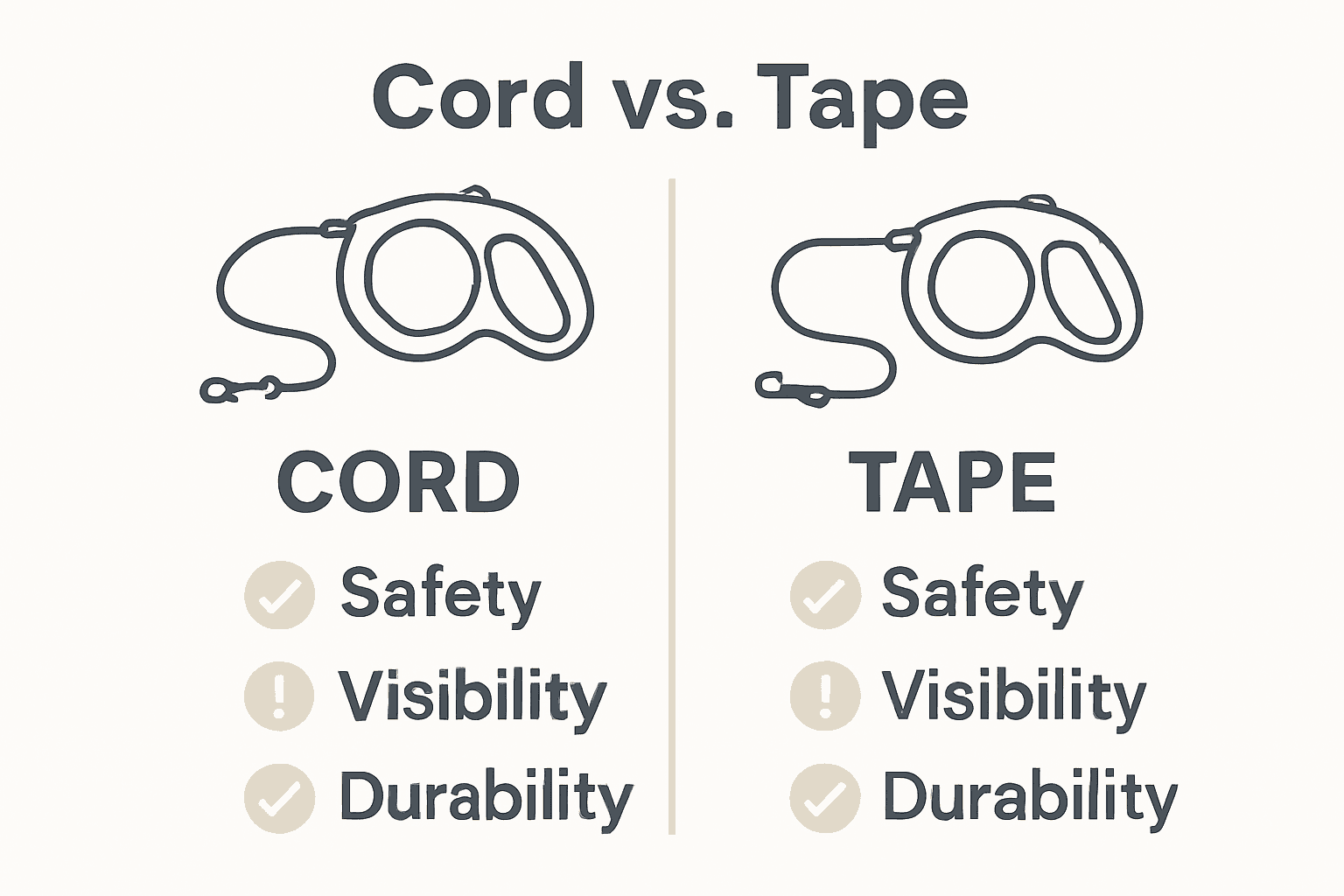
Tape Leashes, in contrast, feature a flat, ribbon-like material that provides several advantages. As noted by the MSPCA, these leashes can extend up to 26 feet and offer enhanced durability. Their key benefits include:
- Wider, flatter design reducing injury risks
- More resistant to tangling
- Better visibility during walks
- Greater strength and tear resistance
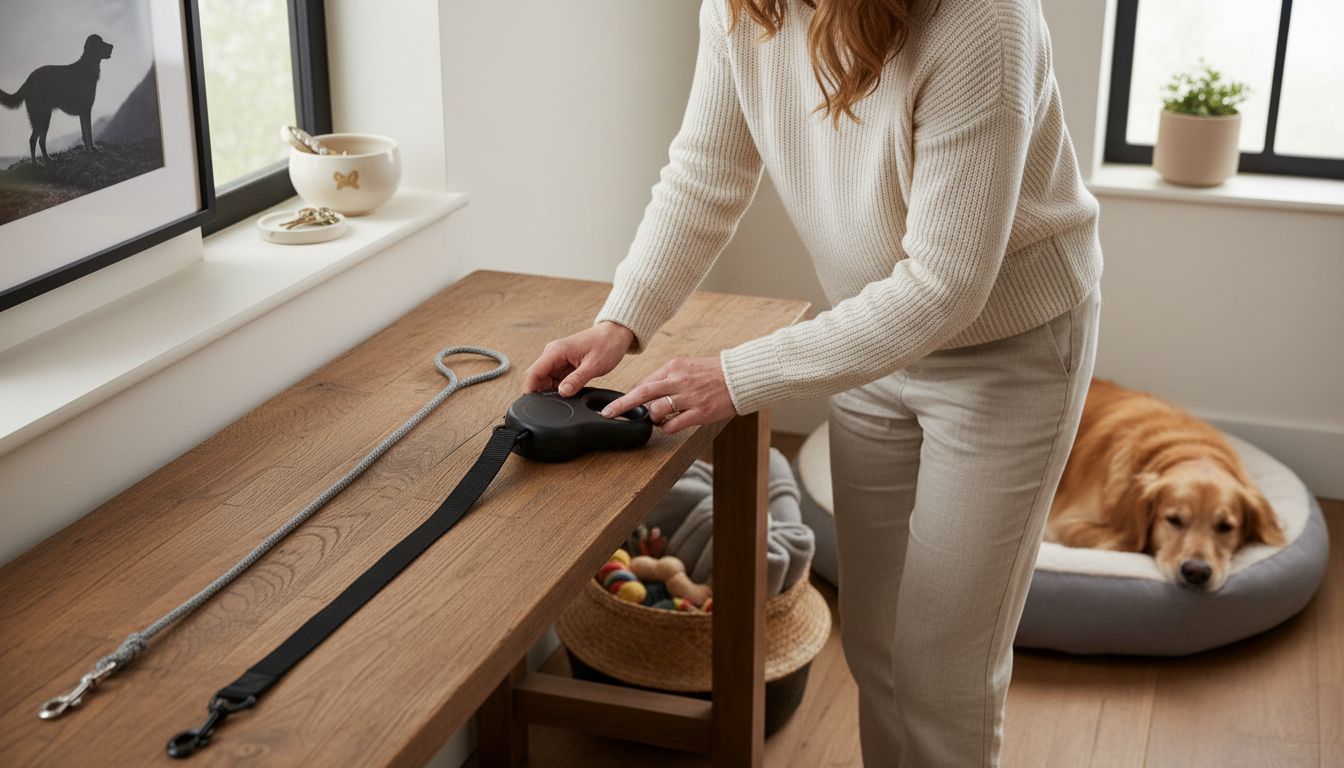
Choosing between cord and tape leashes depends on multiple factors such as your dog’s size, walking environment, and individual behavior. Pet owners should carefully consider their specific needs, evaluating the leash’s material, length, and potential safety implications. For those seeking a comprehensive dog leash guide, understanding these differences is crucial in making an informed selection that ensures both pet and owner comfort during walks.
Key Features And How They Operate
According to the AKC, retractable leashes are sophisticated walking tools with several key mechanical components that enable their unique functionality. At their core, these leashes feature a spring-loaded mechanism housed within a sturdy plastic handle, allowing for dynamic leash length control.
The primary features of retractable leashes include:
- Extensible Cord/Tape: A thin cord or flat tape that can stretch from 10 to 26 feet
- Locking Mechanism: Allows handlers to set and maintain a specific leash length
- Tension Spring: Automatically retracts the leash when not fully extended
- Ergonomic Handle: Designed for comfortable grip and control
As the MSPCA explains, the operational process is remarkably straightforward. When a dog pulls away, the leash extends smoothly; when the dog moves closer or the handler wants to restrict movement, a simple button press locks the leash at the desired length. The internal spring mechanism ensures smooth retraction, making it easy to manage your dog’s mobility without constant manual adjustment.
These leashes work through a delicate balance of tension and control. The internal spool rotates as the leash extends, and the spring mechanism provides consistent tension to prevent sudden jerking or complete slack. For pet owners seeking a comprehensive dog leash guide, understanding these mechanical nuances is crucial for safe and effective use. Proper handling requires practice and an understanding of how the leash’s unique design can enhance or potentially complicate walking experiences.
Safety, Risks, And Usage Guidelines
Both the MSPCA and AKC strongly caution pet owners about the potential risks associated with retractable leashes. These specialized walking tools, while convenient, require careful and responsible handling to prevent potential injuries and accidents.
Primary Safety Risks include:
- Sudden, unexpected stops causing tracheal damage
- Potential for entanglement and rope burns
- Loss of immediate control over your dog
- Mechanical failures in the leash mechanism
- Increased likelihood of dog-to-dog or dog-to-human conflicts
According to the AKC, effective usage requires comprehensive preparation. Owners should ensure their dogs are:
- Well-trained in basic obedience
- Responsive to vocal commands
- Calm and predictable during walks
- Comfortable with leash handling
The MSPCA recommends using retractable leashes only in controlled, open environments with minimal distractions. Urban areas, crowded spaces, and locations with potential hazards are not suitable for these leashes. For those seeking additional guidance, our comprehensive dog leash guide offers in-depth insights into safe walking practices. Remember: a retractable leash is a tool, and like any tool, its effectiveness depends entirely on the skill and attentiveness of its user.
When To Choose Standard Or Retractable Leashes
According to the AKC, selecting the appropriate leash depends heavily on your walking environment, dog’s behavior, and specific training needs. Leash selection is not a one-size-fits-all decision but requires careful consideration of multiple factors.
Scenarios Favoring Standard Leashes:
- Urban environments with high pedestrian traffic
- Training and obedience sessions
- Areas with many potential distractions
- Locations requiring immediate dog control
- Interactions with other dogs or people
Conversely, the MSPCA recommends retractable leashes only for very specific circumstances:
- Wide, open spaces like large parks
- Walking environments with minimal obstacles
- Dogs with excellent recall and training
- Owners who can maintain constant attention
- Situations allowing significant exploration
Ultimately, the choice between standard and retractable leashes depends on your dog’s individual temperament, training level, and the specific walking environment. For pet owners seeking nuanced guidance, our retractable dog leash guide offers comprehensive insights into making the best leash selection for your unique situation. Remember: the right leash is the one that keeps both you and your dog safe, comfortable, and enjoying the walk.
Discover the Perfect Leash for Safer, Happier Walks
Choosing the right leash can transform your daily walks from stressful to joyful. If you have struggled with balancing control and freedom for your dog, understanding retractable leashes is just the first step. Pain points like sudden stops, leash tangling, and safety risks are real concerns that many pet owners face. You want your dog to explore safely while maintaining peace of mind. Our collection of Smart Dog Leashes offers solutions designed to help you navigate these challenges with confidence and ease.

Take control of your walks and enhance your dog’s experience today. Explore durable, easy-to-use designs that combine freedom and safety. Visit Paw Heroes Shop now to find the leash that fits your lifestyle. Plus, check out our Interactive Pet Toys & Accessories to keep your dog engaged beyond the walk. Don’t wait until a leash mishap happens. Upgrade your gear and enjoy worry-free adventures together.
Frequently Asked Questions
What are retractable leashes used for?
Retractable leashes are used to provide dogs with extended mobility during walks, allowing them to explore their surroundings while remaining connected to their handler. They balance control and freedom, enabling dogs to roam and engage with their environment.
What are the main types of retractable leashes?
Retractable leashes primarily come in two types: cord leashes, which are thin and rope-like, and tape leashes, which are flat and ribbon-like. Cord leashes are lightweight and less expensive but can tangle easily, while tape leashes offer durability and better visibility.
What are the safety risks associated with retractable leashes?
The primary safety risks of retractable leashes include potential tracheal damage from sudden stops, entanglement, loss of control over the dog, mechanical failures, and the likelihood of conflicts with other dogs or people.
When should I choose a standard leash instead of a retractable leash?
Standard leashes are advisable in urban areas with high traffic, during training sessions, or in places requiring immediate control of the dog. They are better suited for environments with many distractions and potential hazards.