

Complete Guide to Interactive Pet Toys
Over 60 percent of pet owners report that their animals act out from boredom or lack of stimulation. The right toys do more than just fill the toy bin—they can transform your pet’s daily routine by tapping into natural instincts and supporting happier, healthier behaviors. If you want to reduce problem habits and give your furry friend a mental boost, learning about interactive pet toys could be a real game-changer for both you and your pet.
Table of Contents
- What Are Interactive Pet Toys?
- Types of Interactive Pet Toys Explained
- Key Features and How They Work
- Choosing the Right Toy for Your Pet
- Safety Considerations for Pet Playtime
Key Takeaways
| Point | Details |
|---|---|
| Interactive Pet Toys Enhance Engagement | These toys stimulate pets both mentally and physically, encouraging problem-solving and active participation. |
| Diverse Categories Target Specific Needs | Options include puzzle toys, motion-activated toys, and treat dispensers, each catering to different aspects of play and learning. |
| Safety Is Crucial | Pet owners must evaluate materials, size, and durability to prevent hazards associated with toy use. |
| Personalization Is Key | Selecting toys should consider the pet’s age, size, and play preferences to ensure meaningful interaction and enrichment. |
What Are Interactive Pet Toys?
Interactive pet toys are sophisticated play devices designed to mentally stimulate and physically engage pets by challenging their problem-solving skills and natural instincts. Unlike traditional static toys, these innovative products encourage active participation, providing entertainment and cognitive enrichment for animals.
The concept of interactive play has roots in digital and robotic pet experiences. For instance, Tamagotchi, introduced in 1996, demonstrated how interactive experiences could simulate pet care and engagement. Similarly, FurReal Friends expanded this idea by creating robotic companions that respond to touch and sound, mimicking real animal behaviors.
Modern interactive pet toys come in various forms, each targeting different aspects of animal play and learning:
- Puzzle Toys: Require pets to solve challenges to access treats
- Motion-Activated Toys: Stimulate chase and hunting instincts
- Electronic Training Toys: Provide mental stimulation through light and sound cues
- Treat-Dispensing Devices: Reward pets for interaction and problem-solving
These intelligent toys serve multiple purposes beyond simple entertainment. They help prevent boredom, reduce destructive behaviors, provide mental exercise, and can even support training efforts. For pet owners looking to keep their furry companions engaged, interactive puzzle toys offer an excellent solution for enriching their pets’ daily experiences.
Types of Interactive Pet Toys Explained
Interactive pet toys have evolved dramatically from simple playthings to sophisticated devices that engage animals on multiple sensory and cognitive levels. The diversity of these toys reflects a deep understanding of different pet behaviors and learning styles, catering to various animal needs and preferences.
The history of interactive toys showcases remarkable technological innovation. I-Cybie, a robotic dog produced by Silverlit Toys between 2000 and 2006, demonstrated early examples of toys that could respond to voice commands and touch. Similarly, Aquapets introduced by Wild Planet in 2004 expanded interactive play by creating electronic toys with water-filled cases that responded to sound, highlighting the potential for multi-sensory engagement.
Today’s interactive pet toys can be categorized into several key types:
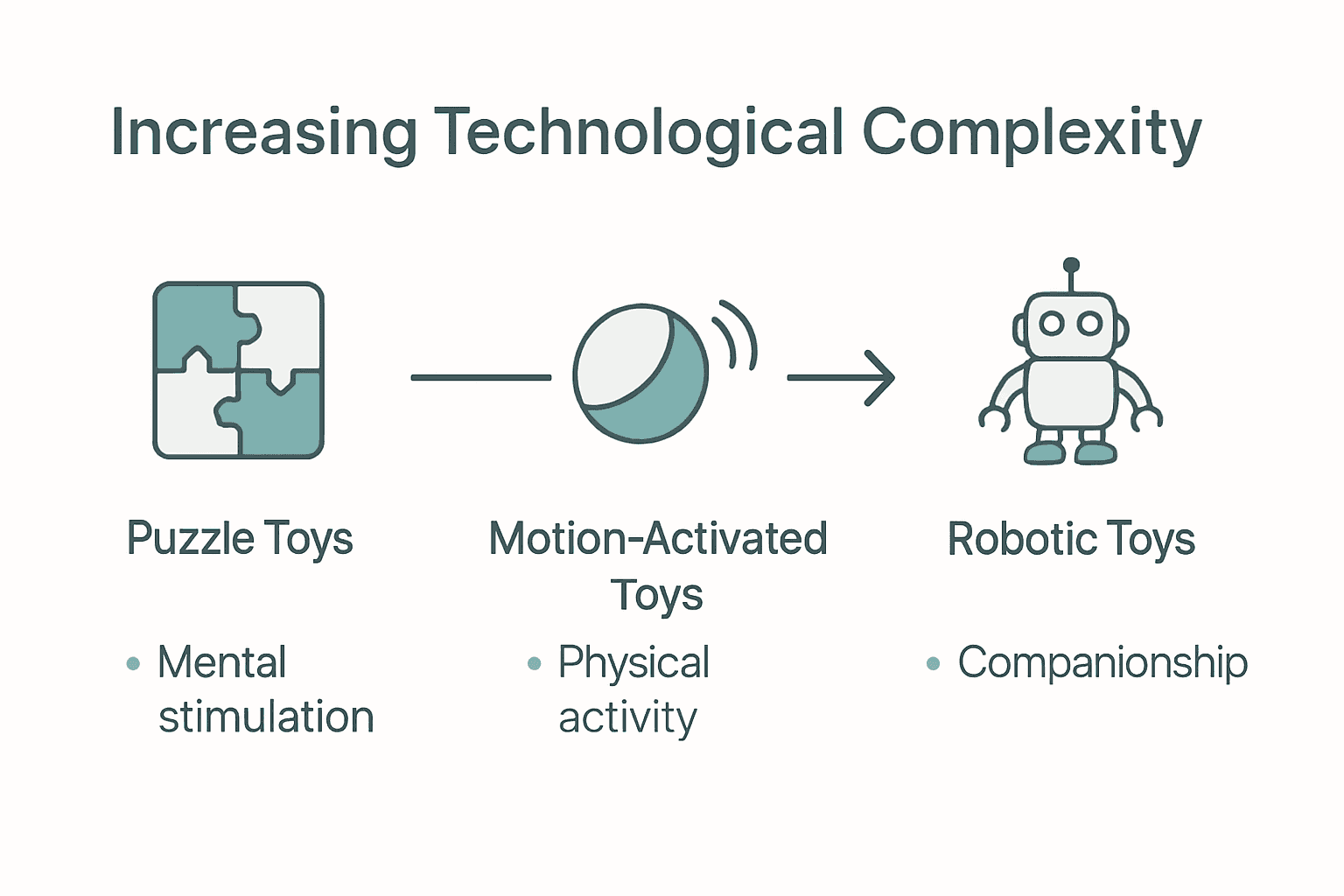
- Puzzle Toys: Challenging mental games that reward problem-solving
- Electronic Training Toys: Technology-enhanced learning tools
- Motion-Activated Toys: Devices that trigger play through movement
- Treat-Dispensing Toys: Reward-based interactive experiences
- Robotic Companion Toys: Advanced devices mimicking real animal interactions
For pet owners seeking advanced play solutions, interactive dog tumbler toys represent a cutting-edge approach to keeping pets mentally stimulated and physically active. These intelligent toys not only entertain but also support crucial cognitive development and prevent boredom-related behavioral issues.
Key Features and How They Work
Interactive pet toys represent a sophisticated blend of technology, psychology, and animal behavior design. These innovative devices go far beyond traditional playthings by incorporating advanced sensory mechanisms, intelligent response systems, and carefully engineered interaction patterns that engage pets on multiple cognitive and physical levels.
The technological evolution of interactive toys is remarkable. Tekno the Robotic Puppy, launched in 2000, demonstrated early potential by featuring over 160 unique emotions and functions, including walking, barking, and responding to voice commands through advanced sensors and motorized components. Similarly, iDog by Sega Toys in 2005 showcased how interactive toys could respond to external stimuli, lighting up and ‘dancing’ to musical rhythms using sophisticated built-in sensors and actuators.
Key technological features that define modern interactive pet toys include:
- Motion Sensors: Detect pet movement and trigger interactive responses
- Sound Recognition: Activate play modes based on animal vocalizations
- Treat Dispensing Mechanisms: Reward pets for specific interactions
- Programmable Difficulty Levels: Adjust challenge complexity
- Battery-Powered Electronics: Ensure consistent, reliable performance
For pet owners seeking cutting-edge engagement solutions, interactive dog tumbler toys represent an innovative approach to mental stimulation and physical activity. These intelligent devices combine multiple interaction technologies to keep pets entertained, challenged, and mentally sharp.

Choosing the Right Toy for Your Pet
Selecting the perfect interactive toy for your pet requires careful consideration of multiple factors, including your animal’s unique personality, age, breed, and individual play preferences. What works brilliantly for one pet might be completely uninteresting to another, making personalized selection crucial for meaningful engagement.
Atlantis Press research emphasizes the critical importance of understanding pet behavior and psychology when choosing interactive toys. The study suggests that toys should strategically align with an animal’s natural instincts and activity levels to maximize engagement and support overall well-being. Similarly, research on the ‘Tom’ pet robot highlights how the right interactive toy can foster deeper social interactions and emotional connections between pets and their owners.
Key considerations when selecting an interactive pet toy include:
- Age Appropriateness: Matching toy complexity to your pet’s developmental stage
- Size and Durability: Ensuring the toy can withstand your pet’s play style
- Safety Features: Checking for non-toxic materials and secure construction
- Interaction Level: Selecting toys that match your pet’s energy and engagement preferences
- Cognitive Stimulation: Choosing toys that challenge and entertain
For pet owners seeking versatile play solutions, small dog chew toys offer an excellent way to combine entertainment with practical benefits like dental hygiene. The right toy isn’t just about playtime—it’s about supporting your pet’s physical and mental development.
Safety Considerations for Pet Playtime
Safety is paramount when selecting and using interactive pet toys. Pet owners must be vigilant about potential hazards that could compromise their animal companion’s well-being, understanding that seemingly harmless toys can pose unexpected risks if not carefully evaluated.
Research from ArXiv on ‘Playing With Danger: A Taxonomy and Evaluation of Threats to Smart Toys’ highlights critical considerations for interactive devices. While the study originally focused on children’s toys, its principles directly translate to pet toy safety, emphasizing the need for thorough evaluation to prevent potential harm and ensure secure interactions.
Key safety considerations for interactive pet toys include:
- Material Quality: Choosing non-toxic, pet-safe materials
- Size Appropriateness: Preventing choking or swallowing hazards
- Structural Integrity: Checking for potential breakage points
- Electronic Safety: Ensuring secure battery compartments
- Supervision Requirements: Monitoring pet interactions with complex toys
For pet owners seeking reliable play solutions, interactive TPR dog chew toys represent a thoughtful approach to combining entertainment with safety. Remember that no toy is entirely risk-free, and regular inspection and supervised play remain crucial for your pet’s protection.
Keep Your Pet Engaged and Happy with Interactive Toys
Finding the right ways to keep your pet mentally sharp and physically active can feel challenging. The article highlights common struggles like preventing boredom and supporting cognitive growth through toys that combine problem-solving and play. If you want to see your pet excited and fulfilled every day, interactive toys designed to stimulate natural instincts and reward effort make all the difference.
Explore our wide selection at Interactive Pet Toys & Accessories | Paw Heroes Shop to find puzzle toys, treat dispensers, and motion-sensitive devices that transform pet playtime into a fun learning experience.

Don’t wait to give your pet the enriching experience they deserve. Visit Paw Heroes Shop now and discover toys that safely challenge your pet’s intelligence and energy. Pair these with essentials like our Automatic Pet Feeders | Paw Heroes Shop and Smart Pet Water Fountains | Paw Heroes Shop for a fully supportive environment. Start making every moment with your furry friend smarter and more joyful today.
Frequently Asked Questions
What are interactive pet toys?
Interactive pet toys are sophisticated devices designed to mentally stimulate and physically engage pets by challenging their problem-solving skills and natural instincts, providing entertainment and cognitive enrichment.
How do puzzle toys benefit my pet?
Puzzle toys engage pets in problem-solving activities that stimulate their mental faculties, prevent boredom, and reduce destructive behaviors by offering a rewarding challenge for accessing treats.
What features should I look for in interactive pet toys?
Key features to consider include motion sensors, sound recognition, treat dispensing mechanisms, programmable difficulty levels, and durable, pet-safe materials to ensure fun and safety during playtime.
How can I choose the right interactive toy for my pet?
Consider your pet’s age, size, activity level, and play preferences. Select toys that align with their natural instincts and provide appropriate challenges to maximize engagement and support their well-being.