

Choosing Interactive Pet Feeders: A Complete Guide
Over 60 percent of american pet owners now use specialized feeders to improve mealtime routines for their furry companions. Finding the ideal interactive feeder means more than just convenience. It can impact your pet’s health, behavior, and daily happiness. Understanding how to choose the right option helps you support your pet’s unique needs while avoiding common feeding mistakes most families make.
Table of Contents
- Step 1: Assess Your Pet’s Feeding Habits
- Step 2: Compare Available Interactive Feeder Types
- Step 3: Evaluate Key Feeder Features And Safety
- Step 4: Match Feeder Size To Your Pet’s Needs
- Step 5: Test And Adjust The Feeder At Home
Quick Summary
| Main Insight | Explanation |
|---|---|
| 1. Assess Your Pet’s Feeding Behavior | Monitor your pet’s eating routine for a week to understand their habits, and nutritional needs. Record meal times and portion sizes to guide feeder selection. |
| 2. Choose the Right Feeder Type | Understand the three categories of interactive feeders: slow dispensing toys, puzzle feeders, and digital automatic feeders, and select based on your pet’s behavior. |
| 3. Prioritize Safety and Features | Look for engaging designs with safe materials, ensuring feeders promote nutrition and slow eating while avoiding choking hazards. |
| 4. Match Feeder Size to Pet’s Needs | Choose a feeder that fits your pet’s breed and portion size requirements, ensuring comfortable access to food for healthy eating habits. |
| 5. Monitor and Adjust New Feeder | Introduce the feeder slowly and observe your pet’s response. Be prepared to make adjustments based on their eating behavior and preferences. |
Step 1: Assess Your Pet’s Feeding Habits
Before selecting an interactive pet feeder, understanding your pet’s unique eating patterns and nutritional needs is crucial. This assessment will help you choose the most appropriate feeding solution that matches your pet’s lifestyle and health requirements.
Start by observing your pet’s current feeding routine. Track their daily meal times, portion sizes, and eating behaviors. Do they eat quickly or slowly? Are they prone to overeating or leaving food unfinished? Some pets have specific preferences like wanting smaller, more frequent meals while others prefer larger portions. For dogs and cats with medical conditions or weight management needs, precise tracking becomes even more important.
Consider documenting your observations in a simple log for a week. Note down details like typical eating times, average food consumption, and any irregular eating patterns. This data will be invaluable when selecting an interactive feeder that can be programmed to match your pet’s specific needs.
 Learn more about understanding pet feeding behaviors in our guide on smart pet feeders.
Warning: Every pet is unique. What works for one animal might not suit another. A thorough assessment ensures you invest in a feeder that truly supports your pet’s health and well-being.
Step 2: Compare Available Interactive Feeder Types
Selecting the right interactive pet feeder requires understanding the diverse range of options available in the market. According to North Carolina State University Veterinary Hospital, interactive feeders come in several innovative types designed to enhance your pet’s mealtime experience and overall well-being.
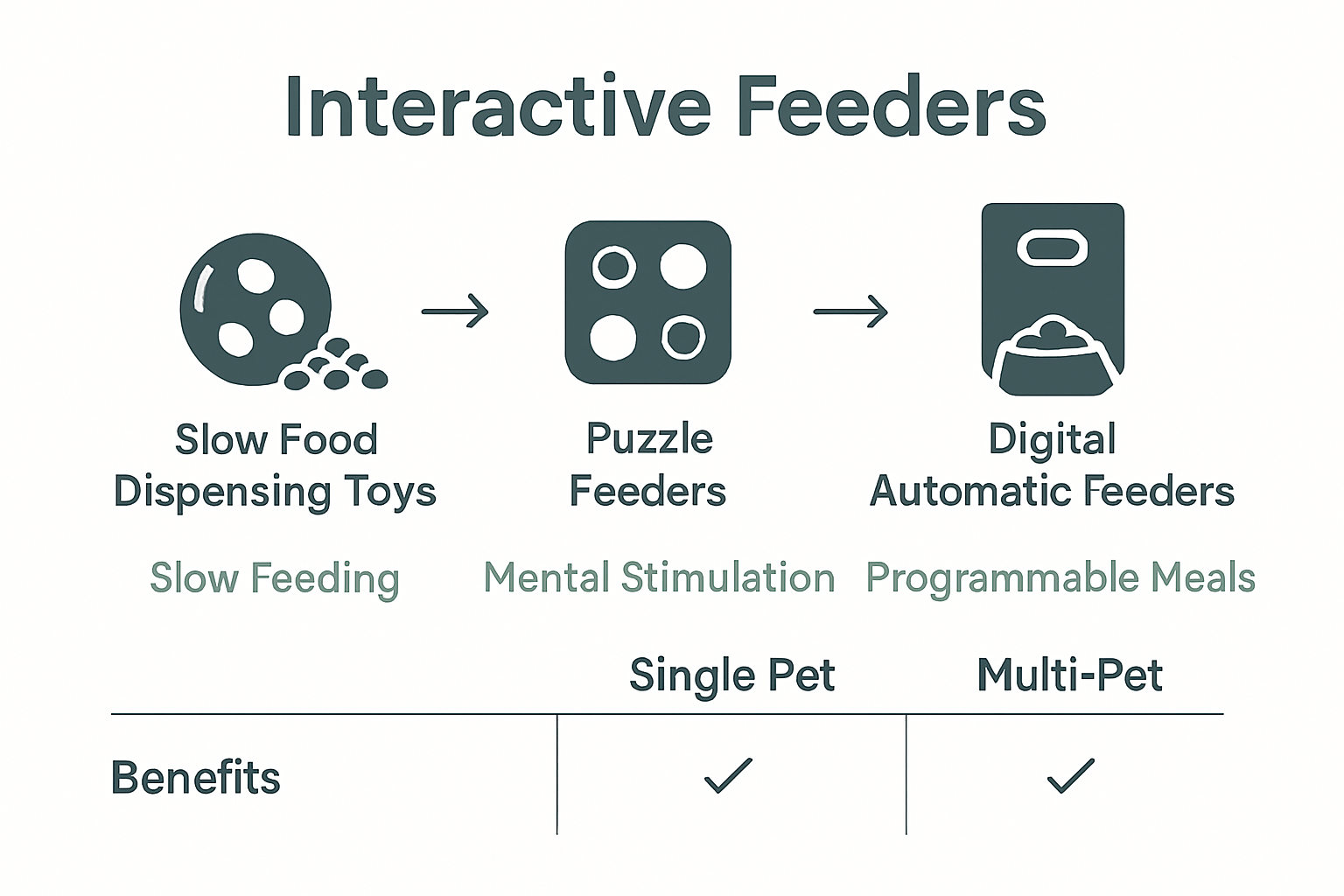
Three primary categories of interactive feeders emerge. First, slow food dispensing toys challenge your pet mentally while controlling eating speed. These devices typically require pets to work for their food by pushing, rolling, or manipulating the feeder. Second, manipulative feeders incorporate puzzle elements that stimulate problem solving skills. These might include compartments your pet must open or mechanisms they need to trigger to access food. Third, digital automatic feeders offer programmed meal portions and scheduled feeding times Learn more about smart feeding technologies in our guide on automatic pet feeders.
Research from PubMed suggests these interactive feeders are particularly beneficial for multi pet households, helping manage portion control and individual dietary needs. When comparing types, consider your pet’s specific behavior, health requirements, and engagement level with different feeding mechanisms.
Step 3: Evaluate Key Feeder Features and Safety
Choosing the right interactive pet feeder requires careful consideration of both functionality and safety features. North Carolina State University Veterinary Hospital highlights the importance of selecting feeders with engaging design elements that challenge your pet mentally while ensuring their physical safety.
When evaluating interactive feeders, focus on key features that promote both nutrition and mental stimulation.
 Look for feeders with multiple compartments or puzzle mechanisms that encourage slow eating and problem solving. Material selection is critical Learn more about smart pet feeder technologies. According to BMC Veterinary Research, the material composition of feeders directly impacts hygiene, with some materials being more resistant to bacterial growth and easier to clean than others.
Warning: Not all interactive feeders are created equal. Always inspect the feeder for potential choking hazards, ensure all components are securely attached, and select a size appropriate for your pet’s breed and eating style. Prioritize feeders made from food grade materials that can be thoroughly sanitized to prevent potential health risks.
Step 4: Match Feeder Size to Your Pet’s Needs
Selecting the right size interactive pet feeder is crucial for ensuring your pet receives appropriate portion sizes and maintains a comfortable feeding experience. When determining the ideal feeder size, consider your pet’s breed, weight, age, and specific dietary requirements.
Start by measuring your pet’s current food portion and daily caloric intake. Smaller pets like cats and small dog breeds typically need feeders with capacities between 1.2 to 3 liters, while larger dogs might require feeders holding 5 to 6 liters Check out our guide on pet feeder sizing for small pets. Pay attention to the feeder’s physical dimensions too small feeders can feel cramped, while oversized models might overwhelm smaller pets.
Warning: Avoid choosing a feeder based on appearance alone. Measure your pet’s typical meal size, consider their eating habits, and select a feeder that provides comfortable access and appropriate portion control. A well matched feeder supports your pet’s nutritional needs and promotes healthy eating patterns.
Step 5: Test and Adjust the Feeder at Home
Successfully integrating an interactive pet feeder requires careful observation and systematic testing to ensure it meets your pet’s unique needs. The American Animal Hospital Association recommends creating a comprehensive evaluation process that tracks your pet’s response to the new feeding system.
Begin by introducing the feeder gradually. Monitor your pet’s interaction with the device and observe their eating patterns carefully. According to research from the Journal of Feline Medicine and Surgery, successful implementation involves paying close attention to portion sizes, feeding frequency, and your pet’s overall engagement with the new feeding mechanism Explore our guide on smart pet feeder technologies. Take detailed notes on how your pet adapts to the feeder noting any hesitation, excitement, or changes in eating behavior.
Warning: Every pet is different. What works perfectly for one animal might require significant adjustment for another. Be patient and willing to make incremental changes. If your pet shows persistent discomfort or disinterest, you may need to recalibrate the feeder settings or consider an alternative model that better suits their individual preferences.
Elevate Your Pet’s Mealtime with the Perfect Interactive Feeder
Struggling to find an interactive pet feeder that fits your pet’s unique eating habits and keeps them mentally engaged While this guide helps you understand key features like slow food dispensing and puzzle mechanisms you need solutions that match your pet’s personality and portion needs Today is the day to transform your pet’s feeding routine with smart choices that enhance their health and happiness
Discover our wide selection of Automatic Pet Feeders | Paw Heroes Shop designed to deliver precision portions on schedule bringing ease and control to feeding time
 Explore innovative designs that promote slow feeding and problem solving in our collection of Interactive Pet Toys & Accessories | Paw Heroes Shop Tailored to challenge your pet while keeping them safe and satisfied Don’t wait to provide your pet with the interactive experience they deserve Visit Paw Heroes Shop now to find the perfect feeder and watch your pet thrive
Frequently Asked Questions
How do I assess my pet’s feeding habits before choosing an interactive pet feeder?
To assess your pet’s feeding habits, observe their daily meal times, portion sizes, and eating behaviors for about a week. Document these details to understand if they tend to eat quickly, prefer smaller meals, or have irregular patterns, which will help in selecting a feeder that suits their needs.
What types of interactive pet feeders are available, and how do they differ?
Interactive pet feeders generally fall into three main categories: slow food dispensing toys, manipulative puzzle feeders, and digital automatic feeders. Each type is designed to enhance your pet’s feeding experience and promote mental engagement, so consider your pet’s behavior and health needs when comparing options.
What features should I look for in an interactive pet feeder?
Focus on features that promote nutrition and stimulation, such as multiple compartments or puzzle mechanisms that encourage slow eating. Also, ensure the feeder is made from food-grade materials that are easy to clean and safe for your pet, as these factors will impact both hygiene and your pet’s health.
How do I determine the right size interactive pet feeder for my pet?
To choose the right size feeder, measure your pet’s current food portion and daily caloric intake. For instance, smaller pets may need feeders with capacities of 1.2 to 3 liters, while larger breeds may require feeders that hold 5 to 6 liters, ensuring comfortable access and appropriate portion control.
How can I test and adjust my pet’s new interactive feeder at home?
Introduce the feeder to your pet gradually and monitor their interaction with it. Pay attention to their eating patterns, portion sizes, and overall engagement with the feeder, and be prepared to make adjustments accordingly if they show discomfort or disinterest, which may take several days to evaluate.