

Complete Guide to the Purpose of Grooming Tools
More than sixty percent of pet owners admit they feel unsure about which grooming tools to use and why each one matters. Keeping pets healthy and comfortable goes beyond occasional brushing. The right grooming tools play a key role in preventing skin issues, controlling shedding, and creating positive bonding moments. Understanding what each tool is designed for helps pet owners give their furry friends the best care at home, from cleaner coats to happier tails.
Table of Contents
- Defining Grooming Tools And Their Purpose
- Types Of Grooming Tools For Pets
- Key Benefits Of Regular Grooming
- How To Use Grooming Tools Safely
- Common Mistakes And Alternative Options
Key Takeaways
| Point | Details |
|---|---|
| Grooming Tools Essential | Grooming tools are vital for maintaining pet health, hygiene, and appearance through activities like brushing, trimming, and cleaning. |
| Types of Tools | Understanding various grooming tools, such as brushes, combs, and clippers, is critical in addressing specific needs of different breeds and coat types. |
| Benefits of Regular Grooming | Consistent grooming supports health by enabling early detection of issues, enhancing comfort, and fostering a positive bond between pet and owner. |
| Safety Measures | Prioritize safety by using appropriate techniques and tools, regularly inspecting equipment, and monitoring the pet’s comfort during grooming sessions. |
Defining Grooming Tools and Their Purpose
Grooming tools are specialized instruments designed to maintain and improve the health, hygiene, and appearance of pets. According to sbcounty.gov, grooming encompasses several critical activities including brushing, combing, trimming, nail cutting, and cleaning a pet’s eyes and ears to sustain both their health and aesthetic qualities.
Pet grooming tools serve multiple essential functions beyond simple aesthetic maintenance. Animal Behavior College highlights that specialized tools like slicker brushes and wire pin brushes play a crucial role in removing loose hair, preventing matting, and supporting overall coat health. These precision instruments help pet owners achieve comprehensive care that goes far beyond surface-level cleaning.
The primary purposes of grooming tools can be categorized into several key areas:
- Health Monitoring: Allows close physical inspection for skin issues, parasites, or abnormal growths
- Coat Maintenance: Removes dead hair, prevents tangles, distributes natural skin oils
- Hygiene Management: Keeps pets clean, reduces odors, and prevents potential infections
- Bonding Experience: Creates positive physical interaction between pets and owners
Effective grooming is not just about looking good—it’s a fundamental aspect of responsible pet care that directly impacts an animal’s physical and emotional well-being. By understanding the purpose and proper use of various grooming tools, pet owners can ensure their companions remain healthy, comfortable, and happy.
Types of Grooming Tools for Pets
Pet grooming tools are diverse and specialized, designed to address specific grooming needs for different animals and coat types. Animal Behavior College identifies several essential categories of grooming tools that every pet owner should understand, including clippers, shears, brushes, combs, and nail tools.
Professional groomers rely on a comprehensive toolkit to manage various grooming requirements. According to Pets Care, their arsenal typically includes specialized equipment like grooming shears, professional clippers, high-velocity dryers, and an array of brushes and combs tailored to different coat textures and lengths.
Here’s a breakdown of the primary types of grooming tools:
-
Brushes
- Slicker brushes: For removing loose hair and detangling
- Pin brushes: Ideal for long-haired pets
- Bristle brushes: Best for short-haired animals
-
Combs
- Wide-toothed combs: Detangle thick fur
- Fine-toothed combs: Remove small debris and check for parasites
-
Cutting Tools
- Electric clippers: For precise haircuts
- Grooming shears: Detailed trimming and styling
- Nail clippers: Trim and maintain nail length
-
Specialized Equipment
- Deshedding tools: Reduce excessive shedding
- Undercoat rakes: Remove dense undercoat
- Dematting tools: Break up and remove stubborn mats
Choosing the right grooming tools depends on your pet’s specific breed, coat type, and individual needs. By understanding each tool’s purpose and function, pet owners can create a comfortable and effective grooming routine that keeps their furry companions looking and feeling their best.
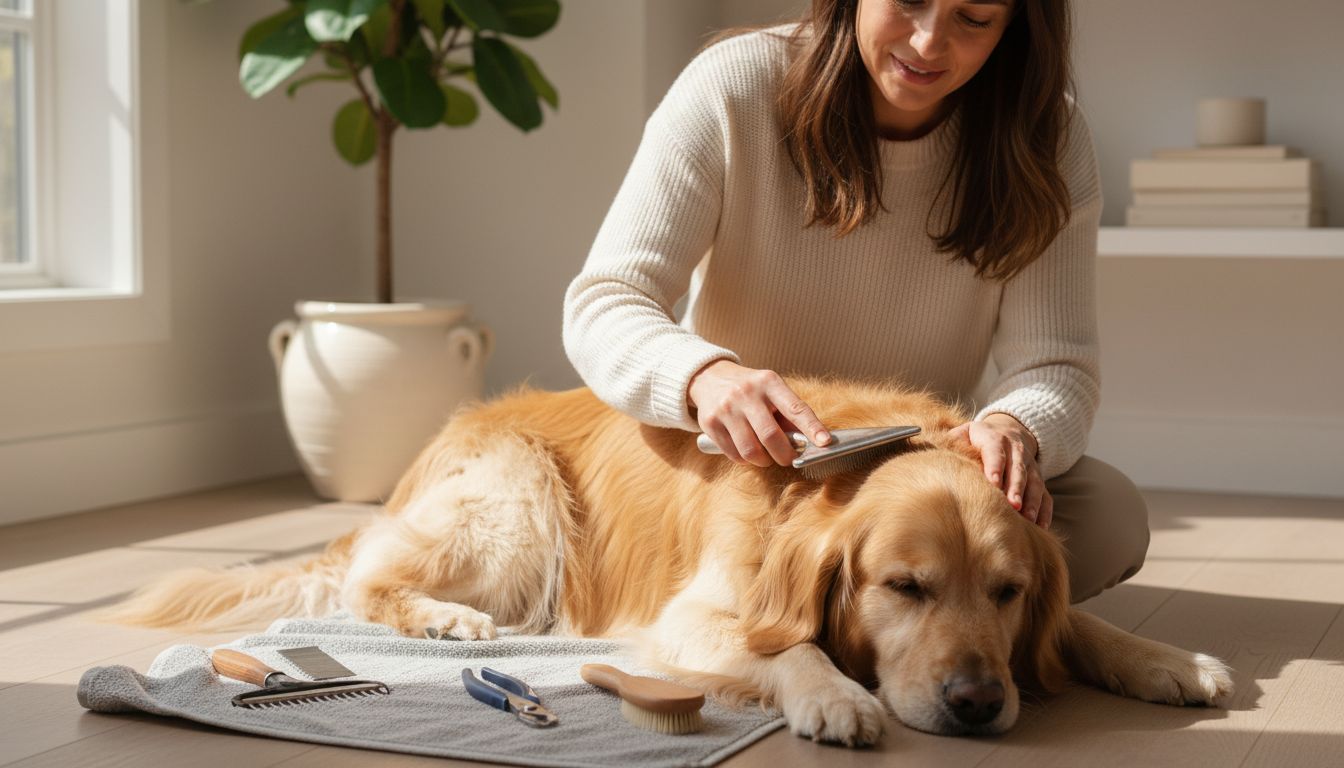 For more detailed guidance, check out our essential pet grooming tools guide.

Key Benefits of Regular Grooming
Regular grooming is far more than a cosmetic routine—it’s a critical aspect of pet healthcare that delivers comprehensive benefits. According to SB County, consistent grooming prevents matting, reduces shedding, and enables early detection of potential skin issues, ultimately contributing to overall pet health and wellness.
The physiological advantages of regular grooming extend beyond surface-level appearance. Animal Behavior College highlights that consistent grooming enhances blood circulation, effectively distributes natural skin oils, and maintains a healthy, lustrous coat. These benefits directly impact a pet’s physical comfort and long-term health condition.
Key benefits of regular grooming include:
-
Health Monitoring
- Early detection of lumps, bumps, or skin abnormalities
- Identification of parasites like ticks or fleas
- Monitoring overall skin and coat condition
-
Physical Comfort
- Prevents painful mat formation
- Reduces itching and skin irritation
- Improves overall mobility by maintaining coat health
-
Emotional Well-being
- Strengthens pet-owner bond
- Reduces stress through gentle handling
- Creates positive physical interaction
-
Hygiene Management
- Removes dirt and debris
- Controls odors
- Prevents bacterial and fungal infections
Understanding these benefits transforms grooming from a simple maintenance task to a crucial aspect of responsible pet care. For more insights into creating an effective grooming routine, check out our essential pet grooming tips guide.
How to Use Grooming Tools Safely
Safety should always be the top priority when grooming pets. Animal Behavior College emphasizes the importance of using slicker brushes with gentle pressure to avoid scratching or damaging your pet’s sensitive skin, and recommends selecting appropriate brush sizes and tensions specific to different coat types.
Choosing the right tools is crucial for safe grooming. According to SB County, pet owners must select grooming tools that are suitable for their specific animal’s coat type to prevent discomfort and ensure effective, safe grooming practices.
Key safety guidelines for using grooming tools include:
-
Tool Preparation
- Inspect tools for damage before each use
- Clean and sanitize tools regularly
- Replace worn or rusty tools immediately
-
Handling Techniques
- Always move brushes in the direction of hair growth
- Use light, consistent strokes
- Watch your pet’s body language for signs of discomfort
-
Personal Safety
- Wear protective gloves if necessary
- Keep tools out of children’s reach
- Use proper lighting when grooming
-
Pet Comfort
- Start with short grooming sessions
- Use treats and positive reinforcement
- Take breaks if your pet becomes stressed
-
Tool-Specific Precautions
- Nail clippers: Trim only the tip, avoid cutting quickly
- Electric clippers: Keep blades cool to prevent burns
- Scissors: Use rounded-tip versions for safety
Mastering safe grooming techniques requires patience and practice. For additional insights on maintaining your grooming tools in top condition, check out our guide on maintaining pet grooming tools.
Common Mistakes and Alternative Options
Grooming mistakes can significantly impact your pet’s health and comfort. Animal Behavior College warns that using incorrect tools for a specific pet’s coat type can lead to ineffective and potentially harmful grooming experiences. Selecting the right tools is not just a recommendation—it’s a critical aspect of responsible pet care.
Pets Care highlights another common oversight: neglecting specialized drying techniques. Professional groomers understand that using high-velocity dryers can dramatically reduce drying times and prevent potential skin issues associated with prolonged moisture exposure.
Common grooming mistakes and their smart alternatives include:
-
Incorrect Brush Selection
- Mistake: Using one-size-fits-all brushes
- Alternative: Match brush type to coat texture
- Solution: Consult breed-specific grooming guides
-
Improper Technique
- Mistake: Brushing aggressively or inconsistently
- Alternative: Use gentle, directional strokes
- Solution: Learn proper brushing techniques
-
Neglecting Tool Maintenance
- Mistake: Using dirty or damaged tools
- Alternative: Regular tool cleaning and inspection
- Solution: Replace tools when they show wear
-
Overlooking Skin Sensitivity
- Mistake: Ignoring pet’s discomfort during grooming
- Alternative: Watch for stress signals
- Solution: Use positive reinforcement
-
Inadequate Drying Methods
- Mistake: Air-drying or using low-quality towels
- Alternative: Use professional-grade drying techniques
- Solution: Invest in proper drying equipment
Recognizing and correcting these common mistakes can transform your grooming routine from a potential source of stress to a bonding experience. For more comprehensive guidance, explore our pet grooming essentials guide to ensure you’re providing the best care for your furry friend.
Elevate Your Pet’s Care with the Right Grooming Tools
Every pet owner understands that proper grooming goes beyond appearance. If you want to prevent discomfort from matting, maintain a healthy coat, and strengthen your bond with your furry friend, using the correct grooming tools is essential. Finding the perfect tools tailored to your pet’s coat type can feel overwhelming but it is the key to safer and more effective grooming routines.
Discover a wide selection of high-quality essentials with Pet Grooming Tools | Paw Heroes Shop designed to meet your pet’s unique needs. Don’t wait until your pet experiences unnecessary stress or discomfort. Visit Paw Heroes Shop today to explore trusted grooming solutions backed by expert knowledge and create a routine that promotes health and happiness. Your pet deserves the best, so take the first step toward confident grooming right now.
Frequently Asked Questions
What are grooming tools used for?
Grooming tools are specialized instruments designed to maintain and improve the health, hygiene, and appearance of pets. They assist with activities like brushing, trimming, nail cutting, and cleaning a pet’s eyes and ears, supporting overall pet health and aesthetics.
How do I choose the right grooming tools for my pet?
Choosing the right grooming tools depends on your pet’s breed, coat type, and individual needs. Different tools are designed for specific coat textures—such as slicker brushes for detangling long hair or bristle brushes for short hair—so it’s important to match the tool to the specific requirements of your pet’s coat.
What are the benefits of regular grooming for pets?
Regular grooming provides several benefits including health monitoring for skin issues or parasites, maintaining coat condition and cleanliness, enhancing physical comfort by preventing mat formation, and strengthening the bond between the pet and owner. It also promotes overall hygiene and emotional well-being.
How can I safely use grooming tools on my pet?
To use grooming tools safely, always inspect them for damage before use, handle them carefully in the direction of hair growth, and be attentive to your pet’s body language for signs of discomfort. Start with short grooming sessions and utilize treats for a more positive and stress-free experience.